Blog 12: Training Design

The organization of training is a critical factor to implementing annual successful seasons.  “Training Design” covers pre-season, post-season, warm-ups, & much more.  This video ties the HPT series together.

Closely related to “Training Design” or organization of training is The hourglass theory.  The below  excerpt from the upcoming e-book Coaching Wrestling in the 21st Century: The Art & Science of Coaching Wrestling describes the importance of organizing training so that all athletes maximize the amount of high performance training from the start, throughout, & the end of their careers.

The hourglass theory suggests once the last grain of sand has escaped the hourglass, an athlete’s career is over. So if an individual student athlete’s maximum number of matches is 300, and s/he wrestles 300 matches before middle school or high school, they will have little if anything left for high school or college wrestling. This hourglass theory was developed based on my own college experience and my coaching experience the last 15 or so years.

Have you ever seen a burned-out, scholarship wrestler in college? I have. I’ve seen several of them and it is not fun. Because I was so excited to wrestle in college (I started wrestling my freshman year in high school), many of these burn-out type of wrestlers intrigued me. So I would ask “Why are you wrestling if you don’t like it anymore?” And typically, the response would be something like “Shannyn, I’ve been wrestling for 13 years and now I’m on scholarship and want to have fun in college.”

I always believe coaches should keep athletes hungry to compete while keeping an eye on the hourglass. When athletes are hungry to compete, they appear to be extremely motivated for competition and training. Many coaches overseas also agree with this motivation to train and compete and use training camps as a way to maximize training & competition.

Former Austrian National Team Coach Bruno Hartmann explained to me “these international training camps are stimulating for all of my wrestlers because they are training with different partners who they may never see again.” Training camps and international training camps are stimulating, motivating and are a different way to get competition within the realm of the hourglass theory. As an example,at the U.S. Olympic Education Center, we typically would have 2-3 international training camps per year with about 1 “real” competition per month. That design kept the athletes hungry to compete, gave them the opportunity to travel abroad and experience a different part of the world, plus minimized the actual number of “real” matches they had.


You can also learn more about High Performance Training right now at the below links:

Copyright © by Coach Shannyn,  All rights reserved

Blog 11: The Olympic Medal Count

Editors note: This article was formerly titled “Popularity of Wrestling” and was changed after the Tokyo 2020 Olympic Games partially due to the almost threefold spike in Olympic medals won by Team USA in 2020.  In the below photo, Tamyra Mensah-Stock celebrates becoming USA’s 2nd Women’s Wrestling Olympic Champ at the Tokyo 2020 Olympic Games.  
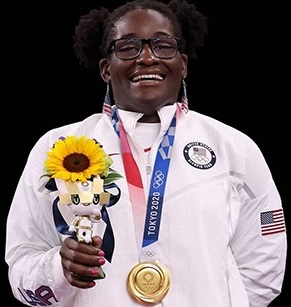
History
Since 1968, USA Wrestling has won a combined 81 medals for an average of 6.2 medals per Games for roughly 16-20 weight classes. The weight class number is an approximation because now there are 18 medals for wrestling at the Olympic Games, and historically, the range has been from 1-20 weights contested since the 1896 Olympic Games (see below image).

USA Olympic wrestling medals won since 1968

  • 1968 Mexico City 2
  • 1972 Munich 6
  • 1976 Montreal 6
  • 1980 Moscow 0 (USA boycott )
  • 1984 Los Angeles 13 (Soviet Union boycott)
  • 1988 Seoul 6
  • 1992 Barcelona 8
  • 1996 Atlanta 8
  • 2000 Sydney 7
  • 2004 Athens 6
  • 2008 Beijing 3
  • 2012 London 4
  • 2016 Rio 3
  • 2020 Tokyo 9
  • 2024 Paris ?

Keep this in mind, wrestling is a very popular sport in the former Soviet Union and now Russia (plus 15 other republics i.e. Armenia, Azerbaijan, Belarussia, Georgia, Lithuania, Ukraine, etc.) During this same time period, the Soviet Union/Russia won almost double the USAs medal count or 153 medals.

Questions
If USA could produce more medals for wrestling at the Olympic Games, would this medal count increase the popularity of our great sport?

If the popularity of our great sport is increased, would this increase the amount of resources available to continue a great wrestling tradition like the Russian men’s programs or the Japanese women’s program?

MMA
Mixed martial arts has exploded in popularity over the last 15 years or so and some of the advertising strategies they are using are similar to what many professional sport organizations are using. One example of this idea is the marketing and promotion of their product via the internet, magazines, & television. Exposure through said media channels may help increase exposure to young aspiring mixed martial artists. Many media sport organizations like ESPN, FOX Sports, NBC Sports, & others also have this same type of mass exposure for everyone to see. This mass exposure may be one of the keys to success of making a sport popular.

Money
Money can help you pay gas, electric, food bills; buy cars; pay rent; & pay mortgages  among other things. If these necessities are in question, it may be hard to keep our best athletes in our sport. MMA can pay more money to athletes that are not world champions nor national team members currently than USA Wrestling can. If you are a national team member, a world or an Olympic Champion, you may be able to survive, thrive, & train in our wonderful sport. It is possible to live, train, & thrive under the current structure (it is hard – believe me) and it appears many world class athletes are leaving wrestling for MMA or other jobs to help pay bills and/or have a family. When many world class wrestlers leave our sport in their prime, this may make our sport less popular.

Other training systems
There are other sport training systems in the USA and abroad that appear to work efficiently & effectively regarding retaining, developing, and paying athletes. Some of the different than wrestling training systems include: Major League Baseball, National Hockey League, track & field, swimming, tennis, skiing, cycling. To my knowledge, all of these training systems actually allow the athletes to ‘go pro’ or forgo amateur status and train/compete as professionals. There are other sports like volleyball, speedskating, & female gymnastics that have a different/successful model than just mentioned and also different from wrestling.

Soccer, or football as it is called world wide, is different too. Many football programs across the globe are very similar to hockey & baseball in the USA in terms of development, retention, and remuneration. In other words, most world football leagues have training centers that feed into the major league system or professional team. And, it usually takes several years for a teen to make it from these training centers to the professional leagues. These systems appear to work because many athletes make the professional ranks, or are on television, or can make a living in the minor leagues if they are not on television. When training systems are efficient & effective, this may increase popularity.

Sport schools
Most successful soccer, baseball, hockey, gymnastic, swimming, & other teams have something similar to sport schools. Many of these sport schools (are before training centers) teach the same sport that is being contested either professionally or at the Olympic Games (compare this to mastering collegiate wrestling in high school & college – then mastering international style wrestling as an adult or at ages 22-27). Some of these sport schools are fee based and some of these sport schools are merit based while others are both.  One key for mass exposure and/or mass participation in sport is high level coaching for all – even for those who may be unable to afford it…

A key component of these sport schools is (at least and many times more than) 15-20 hours of training per week. Another key component of these sport schools is that they are designed just like elementary, middle, or high schools in terms of development and/or length. In other words, most of these schools’ design is to teach a student till junior level mastery which may take 7-10 years.

The final component is the sports being taught are the same as the professional or Olympic Games sport being contested (again, refer to current folkstyle wrestling taught in all USA high schools & colleges). This is a key component because the time it takes to master a sport may take longer if a student starts later. In some cases, students may master only certain parts of the sport prior to making the Olympic Games or before retiring. Think of a sixth grader trying to compete with a high school graduate in sport or in the classroom. This example may be what we are up against in our wonderful sport sometimes at the Olympic level due to gaps in development or a late start at mastering sport. Mastery of sport at a young age, say 19, may increase the popularity for many youth. (2012 Olympic wrestling champions Toghrul Asgarov, AZE, was 19 & Natalia Vorobieva, RUS, were 20 – 2012 Olympic basketball champions & NBA champions Kobe Bryant, LeBron James entered NBA at 17, 18 respectively.)

The Basketball & Soccer effect
These 2 sports are unique because they combine many elements to be popular from above and they add this next factor that many sports do not have. This unique factor is mastering the sport on the playgrounds. Said another way, the USA (basketball) and Brazil (soccer) produce many teenage superstars that ‘go pro’ prior to sport schools and training centers (mass exposure & participation with minimal or no fees). So many athletes are in these sports and it appears that the talent pool is rich due to the popularity of the sports. In other words, so many youth are participating in these sports, that it seems like a lot of training and learning is done via games that are played at American or Brazilian playgrounds or parks with out formal or paid coaches. This may happen because the sports are extremely popular due to the mass exposure given to these sports in their respective countries. Think Pele or Jordan (icons in soccer &  basketball respectively); or think of how many youth want to be like Mike or Pele…

Final ideas
The factors of MMA, money, other training systems, sport schools, and the basketball & soccer effect may have an impact on the popularity of wrestling. Popularity of wrestling may also have an impact on medals won.

Addendum
Summary of overall best wrestling nations at each Olympics, which includes combining all styles that were contested.  Greco-Roman has been contested since the 1896 Summer Olympics, with men’s freestyle being contested since 1904 and women’s freestyle since 2004.
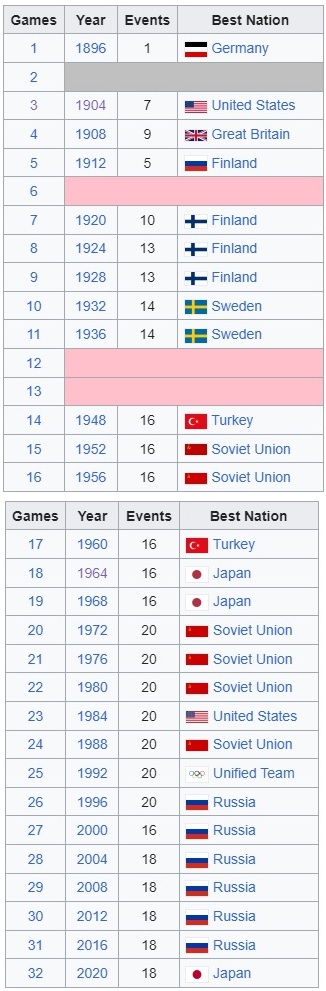
Source: wikipedia.org/wiki/Wrestling_at_the_Summer_Olympics


You can also learn more about High Performance Training right now at the below links:

Copyright © by Coach Shannyn, All rights reserved

Blog 10: High Performance Training II Day 7 – Communication

Blog 10: High Performance Training II Day 7 – Communication

In this video, learn how effective communication can be used with your team, parents, administrators, sponsors, and everyone who has a stake in your success.

Excerpt from High Performance Training: Coaching Wrestling in the 21st Century

The other people you should get to know prior to teaching & coaching any wrestling program are your administrators, staff, parents, volunteers, sponsors, and the media (who all will be referred to as stakeholders).  In many cases, these stakeholders are apart of your team and will help your program achieve its goals.  On the other hand, these same stakeholders may be in positions to thwart your goals unless you as the coach have used your communication skills to let them know they are important, respected, and central to your program’s goals.

I believe stakeholders should be treated with respect in all areas of communication.  Below are several ways to communicate with your stakeholders in a respectful manner:

  • Respond to questions, concerns promptly & w/tact
  • Ask stakeholders their opinions
  • Ask stakeholders how you are doing
  • Invite stakeholders to your office
  • Invite stakeholders to view one of your practices
  • Listen to stakeholders attentively
  • Avoid complaining to stakeholders

Everyone has a boss and generally there is a chain of command that must be adhered to for any organization to be successful or a high performance system.  In most cases, your administrators, athletic directors, or board will be your immediate bosses and these folks generally want to see you succeed.  That is pointed out because if you as coach do your job well, and adhere to the bullets above, you are more likely to build great relationships with your bosses and the other stakeholders (your team).

Part of your job as coach is to let your team know your plans i.e. what is going on, why it is going on, how it is going on, & when goal(s) will be completed.  Essentially, great communication with your stakeholders allows your team to feel and be successful with you plus know what is going on without being left in the dark or being surprised.


You can also learn more about High Performance Training right now at the below links:

Copyright © by Coach Shannyn,  All rights reserved

Blog 9: Focus

Blog 9: Focus

The key to all psychological skills training is focus.  In this video, learn ways to master concepts to avoid distractions while at the same time increase your ability to concentrate on your goals.

Excerpt from Coaching Wrestling in the 21st Century

Psychological Skills Training (PST) is listed towards the end of terms and could have been listed first and here is the reason why.  If athletes are stressed-out, unmotivated, or distracted, they are less likely to perform at high levels consistently.  Motivation, focus, & recovery are key to performance and PST can enhance motivation, focus, & recovery.  Sport psychology is a profession as is psychology and psychiatry.  Those professions are all different and all can help anyone understand motivation and focus better.  Many athletes, coaches (in this country and abroad) use the expertise of sport psychologists to gain an athletic advantage.

Long time U.S. Olympic Committee sport psychologist Kirsten Peterson, Ph.D., actually helped me as a U.S. Olympic Training Center resident athlete and as a U.S. Olympic Education Center coach.  Peterson essentially gave me the tools to control my thoughts as an athlete and as a coach.  As an athlete, Peterson met with me once per week and taught me how to let go of the past, move on, and plan for the future.  As a coach, Peterson recommended videos and books that helped me design a PST program for athletes to implement on a weekly if not daily basis.  Peterson also suggested I check out the USOC library for additional PST resources.

PST skills worth mastering:

  • Focus
  • Goals
  • Imagery
  • Self-talk
  • Energy management
  • Performance planning

You can also learn more about High Performance Training right now at the below links:

Copyright © by Coach Shannyn,  All rights reserved
Blog 8: High Performance Training III – Recovery

Blog 8: High Performance Training III – Recovery

Recovery is one of the most important concepts in the periodization model that many overlook.  After this video, you will be able to detect underrecovery and design high performance recovery strategies.

Excerpt from Coaching Wrestling in the 21st Century

The transition phase, in a periodization of training model, is a break or decrease from training volume from season to season in a manner that helps athletes grow, develop, and recover. The end of a training month (or mesocycle) generally has a recovery week and a recovery week is also designed to decrease training volume to help athletes grow, develop, and recover. Breaks in between bouts of wrestling competitions or training are also a decrease in volume of work and also help athletes grow, develop, and recover. Recovery is one of the secrets of training that often gets overlooked (to the demise of many coaches and athletes) so we will spend some time describing this very important concept.

One of the components of anabolic steroids, which is sometimes used as an illegal performance enhancing drug, was the very quick recovery time it allowed its illegal abusers. To be clear, anabolic steroids are illegal PEDs, and, I am not endorsing nor recommending anyone use them and my point is to show you how important recovery is. Because illegal steroids allowed its abusers to recover quickly, it also allowed them to train more and have more good to great practices. This accumulation of training hours gave anabolic steroid abusers an illegal advantage because it was like they had trained twice or three times as much as non-anabolic steroid users. Can you imagine what type of an advantage 2-3 times the amount of training (designed by sport scientists, medical doctors & high performance training coaches) would give anyone?

One of the byproducts of training is fatigue (fitness fatigue theory – explained below). Recovery time allows our bodies to recuperate, relax, and re-build so that the training can be optimally realized. The process of daily recovery generally takes about 5-24 hours and involves eating at least 3 nutritious meals per day (plus re-hydrating), sleeping for 8-10 hours per day, and letting the body naturally get back to its homeostasis or normal state. When athletes recover properly, they can actually do more work again till they are tired and need another break. This cycle of work, rest, recovery is normal and happens in all parts of life. Have you ever read a book for more than 3 hours in a row or written a paper for more than 3 hours in a row with no breaks? If so, how did you feel during and after those work bouts? And, did your quality of work start to diminish? The body needs intermittent breaks to adequately and consistently perform at high levels in sport, life, and everywhere else.

So how can you as coach design great recovery plans?

You can design great recovery plans by thoroughly understanding & applying each phase of a periodization of training model i.e. pre-competition phase, competition phase, & transition phase. That seems simple and sometimes the balance of each phase gets unbalanced. In other words, one phase of the season may not support the other and underrecovery (overtraining) or burnout or injuries or quitting may happen with the athletes. To balance each phase, coaches should keep in mind LTAD (Long Term Athlete Development) and really understand what each phase could look like.

Another concept for designing great recovery plans is utilizing the fitness fatigue theory. This theory suggests 2 things happen when any athlete trains: they get fit and they get fatigued. So, every athlete must have time to recover in order to optimally realize the fitness just gained after training. If athletes are allowed adequate time to recover (generally 5-24 hours) they will be more ready for the next workout or training session. Given enough recovery time via a recovery week (when the volume of training is reduced for entire week), athletes will actually supercompensate or be more fit than they were before the start of the mesocycle and recovery week. In other words, when athletes are in the middle of a training block or mesocycle, they are more fatigued because the volume of training is increasing. Athletes will optimally realize fitness training and be more in shape after a recovery week when the fatigue declines faster than the fitness declines due to the decrease in the volume of training.


You can also learn more about High Performance Training right now at the below links:

Copyright © by Coach Shannyn,  All rights reserved

Blog 7: Competition stress

Competition stress

Doubt, fear, & stress are all forms of competition stress that can be managed then channeled into usable, productive energy.  Saori Yoshida, in the above photo, was one of the best at turning competition stress into fuel as she won 3 Olympic Gold medals & 13 World Championship Gold medals.  In the below video, learn strategies to consistently control your nervousness for High Performance Training.

One of the ways that athletes can learn how to effectively deal with competition stress is to study, master, & apply what I like to call the basics of PST or psychological skills training which include and are not limited to Imagery & Self-Talk.  PST can be executed on an ongoing basis just like physical training or sport specific training.

Several years ago, I put together self-help videos to help athletes & coaches alike  discover, learn, then master the basics of High Performance Training via the Elias George Wrestling Foundation website.  Here, you will find a comprehensive & systematic plan for success in our great sport.

One of the challenges that was brought to me by coaches & athletes is the amount of time, energy, & work that needs to be done to become successful in our sport.  My answer to this challenge is is in the form of a question:

What does it take to be great at anything?

The short answer is planning, action, patience, perseverance, & desire.

A longer answer to that rhetorical question is spelled out here.

Dealing with and overcoming competition stress so that you or your athletes can perform at the highest level consistently is what most of the Coach Shannyn Blog and High performance Training are all about.  To that end, you have the power to learn, master, then apply strategies to effectively use competition stress to your advantage.


You can also learn more about High Performance Training right now at the below links:

Copyright © by Coach Shannyn,  All rights reserved

Blog 6: High Performance Training II Day 2 – Intensity

Blog 6: High Performance Training II Day 2 – Intensity

Excerpt from A Sport Science Approach to Coaching 

A lot of sport scientists measure how hard athletes are working by intensity of work done. Another way to explain intensity is to use the example of drilling in wrestling or wrestling live. In that example, wrestling live would be more intense than drilling because the athletes would be working (physiologically & psychologically) as hard as they could.  The below video & blog about training intensity go into more detail to avoid overtraining, under-recovery, & injuries during training while helping athletes reach peak performances in competitions.

One more example could be a learning technique practice versus a drilling technique practice. In most cases, athletes will be working harder in a drilling technique practice versus a learning technique practice. So, drilling technique generally is more intense than learning technique.

Intensity of practices can be measured using the examples of the last paragraph combined with using volume which essentially is how much athletes have trained. In other words, a practice can be made more intense based on what kind of practice it is. The below example shows intensity of practices in a mesocycle progressively getting more intense until the recovery week:

Mesocycle III intensity example

  • Week 1 learning technique practice
  • Week 2 drilling technique practice
  • Week 3 live wrestling practice
  • Week 4 recovery week

At the U.S. Olympic Education Center, when we had practice twice per day, typically one practice would be more intense than the other on the same day. Generally, morning practices were technique sessions to teach the athletes how to do the skill. And, the afternoon practices were generally drilling moves learned in the morning followed by live wrestling.

According to U.S. Olympic Training Center sports scientist Bill Sands, PhD, as a rule of thumb, coaches should generally increase microcycle intensity up to 30% per week in a mesocycle until the recovery week. This increase in intensity allows the body and mind to adapt to more volume of intensity gradually and prevents overtraining and injuries. Another rule of thumb, when having 2 practices per day, is to have no more than 3 high intensity practices in a row prior to a recovery day. Again, this is to reduce the risk of overuse injuries and overtraining.


You can also learn more about High Performance Training right now at the below links:

Copyright © by Coach Shannyn,  All rights reserved

Blog 5: Psychological Skills Training – Goals

Blog 5: Psychological Skills Training – Goals

The below video and blog detail Goals plus examples of how to execute your plans.

Set a goal that is SMART.

  • Specific: 10 push-ups per night is more specific than saying I will do push-ups nightly.
  • Measurable: becoming a better student by studying with flashcards, re-reading aloud after reading, & asking teacher what to do to increase my scores or grades can be evaluated, analyzed, & measured.
  • Attainable: not so hard no one can do it or so easy you have already done it.
  • Realistic: executing 1 million push-ups in 1 minute is unrealistic – as is beating Jordan Burroughs in wrestling at your current development stage.
  • Timely: when you will accomplish goal. Goals need timelines to become real…start dates and finish dates.
  • Identify why this goal will make you happy or better. Think of why you will enjoy this goal.
  • List obstacles in your way. Becoming a straight ‘A’ student or a state champion has many obstacles and you should list them. You may be unable to see or list all obstacles now…but they are there.
  • Seek guidance & counsel. This is what your parents, teachers, coaches, and most adults are for…they can help you if you ask.
  • Consider who can help you. Your friends, relatives, classmates, teammates may be able to help you if you ask.
  • List skills & knowledge required. Do you have to master reading or basic math or basic wrestling skills or whatever to accomplish your goal?
  • Develop a plan of action. Action or inaction makes everything happen. Write it down and do it!!!
  • Set a deadline. You need a start and finish time to realize your goals…other wise you are wishing, dreaming, wasting time and running your brain in circles.

Olympic Champion and Olympic Greco-Roman Coach Steve Fraser created the AP&R form to assist his athletes in planning, executing, and reviewing goals. An adapted AP&R form can be found here: Athlete Planning & Review. For more mental skills resources, view Mental Skills Handbook.

For more information on Goals click here.


You can also learn more about High Performance Training right now at the below links:

Copyright © by Coach Shannyn,  All rights reserved

Blog 4: High Performance Training II – Peaking & Tapering

Blog 4: High Performance Training II – Peaking & Tapering

Excerpt from Coaching Wrestling in the 21st Century

This term helps athletes psychologically and physiologically become ready to have their best athletic performances based on the annual plan.  Simply put, athletes will peak for competitions in a high performance training plan that is based on a periodization of training model.  This means that you as coach must implement plans that monitor training and taper athletes at the right time so they are rested, fit, and mentally ready. In the below video & excerpt, examples plus descriptions of how to implement peaking & tapering models are explored to help athletes reach their full potential.

Tapering, a form of recovery, implies reducing the amount of training volume over several weeks (or a month) while also enhancing or maintaining fitness.  Here’s an example of reducing volume of training in a mesocycle via a taper:

Mesocycle III taper example

  • Week 1 live wrestling in minutes: 57
  • Week 2 live wrestling in minutes: 45
  • Week 3 live wrestling in minutes: 36
  • Week 4 live wrestling in minutes: 30

Note: the live wrestling in minutes is the total volume for each week.

Tapering is similar to a recovery week except that it is a longer time period of reducing the volume of training in a progressively, exponential manner.  The idea behind the taper is to reduce the fatigue built up from a high performance training plan while also maintaining or increasing fitness.  When this is done, a peak in performance is possible because the fatigue from months of training has been reduced based on the fitness fatigue theory.

Because most wrestling teams compete weekly, if not by-weekly, it is difficult to peak for every competition.  So, one alternative is to train through many tournaments or competitions and peak for a select few competitions.  This implies tapering likely 3-4 times per year so fitness is not diminished significantly.  If coaches taper more than 3-4 times per year, it is unlikely the athletes will peak that many times due to variables like under-recovery, reduced amounts of training/fitness, psychological fatigue, and too many competitions.

Another alternative is to have “real” competitions once per month or so and have training matches in the wrestling room. Training matches allow for a high performance training model that minimizes fatigue and maximizes training.  The result of focussing on peaking and tapering athletes for 3-4 competitions per year allows the athletes enough time between each event to fully recover and be extremely motivated for state, national, and international competitions.  I had success with this alternative at the USOEC where many of my athletes went on to win championship medals at all levels nationally and internationally.


You can also learn more about High Performance Training right now at the below links:

Copyright © by Coach Shannyn,  All rights reserved