Blog

African-American Pioneers in Women’s Wrestling 2026

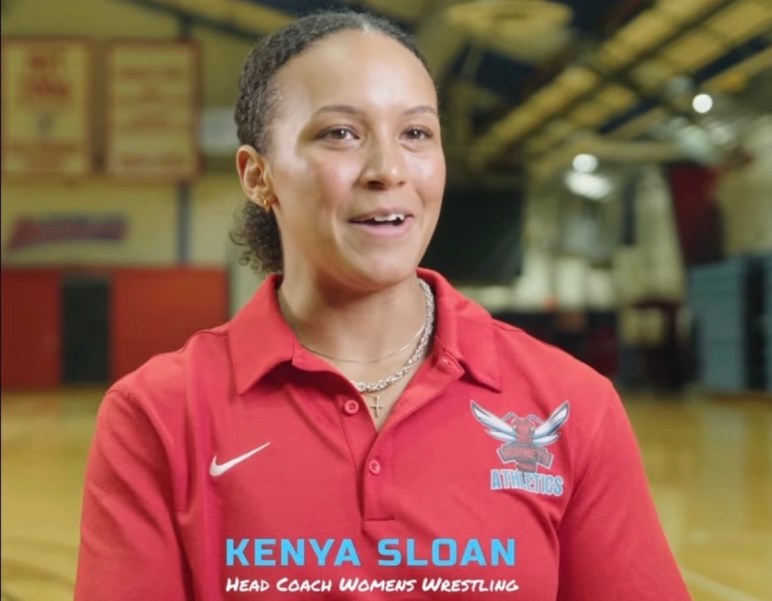
Title image is Kenya Sloan at the Delaware State University. Photo courtesy of HBCUGameday.

We recognize Carter G. Woodson as the “father of Black history”, “Negro History Week (1926)”, & Black History Month (1970)… 

We also recognize the sacrifices that many Black American & African-Americans made so that these African-American Pioneers in Women’s Wrestling can exist and will contribute to this sport annually — by archiving history about pioneer female wrestling every February — as women’s wrestling continues to grow plus positively impact more & more diverse people in US colleges, high schools, & national teams.

Women’s wrestling at the Olympic Games (2004), in College (1994), & World Championships (1987) is a relatively new phenomenon. However, Black American and African-American women (and men) have been trailblazers in women’s wrestling from the start of USA fielding teams. This article recognizes many of those American black women (and men) who made senior world teams, coached women’s World or Olympic Teams, or coached women’s collegiate teams.

Kenya Sloan became the first African-American head women’s wrestling coach at a Historically Black College & University for NCAA DI Delaware State University in 2025.  Sloan also served as an assistant women’s wrestling coach for NCAA DI Sacred Heart in 2024-25.  She was a 2022 NAIA National Champion, a 2X NAIA All-American, a 2X WCWA All-American, & a 4X Academic All-American for Campbellsville University.  Sloan earned bachelor’s degrees in Exercise Science & Educational Ministries from Campbellsville University.  She became Tennessee’s first 4X female high school state champion with an undefeated record of 87-0 at Hardin Valley Academy.

Tamyra Mensah-Stock became the first female Black American Olympic Champion at the 2020 Tokyo Games and second African-American women wrestler to be crowned World Champion in 2019. She accomplished this feat at 68kg and also won another World Championships gold medal in 2022, a silver medal in 2021 and bronze medals in 2021, 2018.

In college, she was a 2X WCWA National Champion and 4X all-American for Wayland Baptist University. Mensah-Stock is from Texas (where high school girls wrestling has been sanctioned since 1999) and won 2 state titles while finishing as runner-up her sophomore year for Morton Ranch H.S.

Leia Kawaii was the first Black American World Championships medalist for Team USA women’s wrestling in 1989. The inaugural women’s world championships was held in 1987 and Team USA first fielded a women’s wrestling team in 1989.

Kawaii wrestled for Team USA at 2 World Championships winning a silver medal in 1989 at 70kg and placing 6th at the World Championships in 1991 at 75kg. During this time period, there were no national team stipends nor even a women’s national team coach. USA Wrestling hired their first full-time national team women’s coach in 2003. After her experiences at the Worlds, Kawaii took her talents into professional wrestling & bodybuilding to further her career.

Tocarra Montgomery was the first African-American Olympic wrestler at the inaugural Olympic Games for women’s wrestling in 2004 at 72kg. Montgomery also won 2 silver medals at World Championships in 2001 at 68kg & 2003 at 72kg. For her accomplishments as an athlete, Montgomery was named FILA International Female Wrestler of the Year in 2001. She is the first black American woman wrestler to receive this honor (first American female too) and just the third American to win that honor. Montgomery was also the first African-American female head women’s wrestling coach (third American Women) as she led Lindenwood University from 2010-2016.

Randi Miller became the first Black American female Olympic Medalist by winning a Bronze Medal at the 2008 Beijing Olympic Games at 63kg. Also in 2008 she was named U.S. Olympic Committee Female Wrestler of the Year & USA Wrestling Female Wrestler of the Year. After coming out of retirement, Miller wrestled for the Army World Class Athlete Program (WCAP) and was a World Military Champion in 2012 while also representing Team USA at the 2014 World Championships.

Miller was also the first black woman wrestler to become a resident athlete at the former U.S. Olympic Education Center on the campus of Northern Michigan University. At the USOEC, she placed 5th at the 2005 World University Championships at 63kg. For her wrestling accomplishments, Miller was named to the Texas Wrestling Hall of Fame.

In 2021, Miller became the first African-American female head coach to lead Texas Women’s University women’s wrestling team. Iris Smith was the first African-American female wrestler to win a World Championship (2005) gold medal and first black woman to win a world wrestling title for the WCAP — where she was also a Military World Champion (2010). Smith won her gold medals & world championships for Team USA & WCAP at 72kg and was also part of 2 other world championships teams. She was on USA Wrestling National Teams (top 3 per weight class) for 13 years which is a record for African-American women wrestlers. Currently, Smith is a Staff Sergeant in the U.S. Army and an assistant coach of WCAP.

Tina George became the first African-American multi World Championships medalist in 2002 & 2003 by winning silver medals in back to back years at 55kg. George made 7 World Teams in total and she also won a Pan American Games gold medal plus won 2 silver medals at the Pan American Championships. (The Pan American Games is similar to the Olympic Games and is a multisport championship for countries of North, South, & Central Americas.) George was part of the Army WCAP and later retired due to injuries sustained in combat.

Kelsey Campbell became the third consecutive Black American, in as many Olympic Games, for women’s wrestling in 2012. She was a member of the 2011 World Team and won 5th place at the 2010 World Championships. Campbell was a silver medalist at the 2009 Pan American Championships. She was also the first African-American female wrestler for Arizona State University and won 2 Women’s College National Titles in 2007 & 2008. After graduating from ASU with a degree in Religious Studies, she completed an MBA degree for the Keller Graduate School of Management.

Leigh Jaynes was a 2015 World Championships bronze medalist at age 34 making her the oldest American woman to win a world medal.  She attributes most of her success in life to the lessons learned in the sport, her military service, & her determination to keep going despite extreme adversity. She also made 2 other World Teams (2007 & 2012) and was part of the Army WCAP. After 14 years in the Army, Jaynes became the head coach at Delaware Valley University which makes her the third female black head women’s wrestling coach.

Vicki Anthony made 2 World Teams for Team USA placing 5th in 2013 & 2017. She also was a 2X Jr. World Champion in 2009 & 2010. Anthony has been on the National Teams (top 3 in weight class) since 2012 or for seven years. After her success at Jr. Worlds, Anthony took her talents to Simon Fraser University (Canada) where she was a 4X WCWA Nationals champion (2010, 2011, 2013, 2014) — the first 4X National Champion in the history of women’s college wrestling.

Breonnah Neal became the first Black American female head women’s wrestling college coach at Frostburg State University in March of 2023. This is Neal’s third head coaching job and she also was the second African-American female head women’s wrestling college coach at Ferrum College in 2019. She coached at Gannon University in PA and was the first black American female head coach to lead that women’s wrestling team from 2021-23. During her college career, Neal was a 4X WCWA all-American winning a National Title for King University after transferring from Campbellsville University where she was a WCWA runner-up.

Tarkyia Mensah became the first Black American head women’s wrestling coach at Carthage College in 2025.  Mensah also the first African-American head women’s wrestling coach at Schreiner University in 2022. As a wrestler, Mensah, was a 2X WCWA National Champ for Wayland Baptist University. She was also a 3X WCWA All-American and a Texas State Champ.  Tarkyia, aka TK, is the twin sister of Olympic Champion Tamyra Mensah-Stock.

Roye Oliver was the first Black American to coach Team USA women’s wrestling at the World Championships and did so from 1993-1997. During that time period, he helped coach 1 World Champion & 8 women’s World Championships medalists. Oliver coached Treeva Cohee & D’Anya Bierria at the 1994 World Championships for Team USA at 50 kg & 65kg respectively. Cohee & Bierria placed 4th at Worlds in 1994 making them the first pair of African-American women wrestlers to place at Worlds in the same year.

Oliver also coached the Life Pacific women’s wrestling team from 2020-2022 and was the first black American head coach to do so.

Olympic Silver Medalist Townsend Saunders became the first African-American to coach Team USA at the inaugural Olympic Games for women’s wrestling in 2004 helping Team USA win 2 medals. In 2003, Saunders was part of the women’s coaching staff at the 2003 World Championships where Team USA took second place to Japan with 1 World Champion & 7 total medals.

Duane Martin is the first Black American coach of the Army World Class Athlete Program women’s team. Martin was an integral part of leading & coaching WCAP women wrestlers at numerous international & national tournaments.

Shon Lewis, head coach of WCAP, was in Iris Smith’s corner coach at the 2005 Worlds where Smith became the first black American to win a women’s world wrestling gold medal.

Brian Jackson became the first (or second — see below) African-American head women’s wrestling college coach in 2005 at Missouri Baptist University. Jackson’s “dual” tenure is the longest in history, to this day, and he was the first black American of “dual” coaching roles in wrestling. Jackson’s dual role includes coaching both the men & women wrestlers at MBU from 2005-2022.

Tyreece Gilder enters his 12th season as an African-American women’s head wrestling coach at Waldorf University. Gilder is also a USA Wrestling Bronze Level certified coach.

Amond Prater became the head coach at Missouri Baptist University in 2024.  He was also a Black American “dual” coach at Fontbonne University from 2019-2022 and was the inaugural coach for both the men’s & women’s programs a.

Kirwyn Adderley was women’s head wrestling coach at Missouri Baptist University in March of 2022-2023 after serving as assistant coach at MBU in 2021.

LeRoy Gardner is the third African-American “dual” coach being recognized here. He lead the University of the Ozarks women’s (and men’s) wrestling teams from season in 2015-2021. Gardner, who serves as an officer in the United States Navy, also served as a USA senior U23 women’s coach for United World Wrestling in 2018.

Devane Dodgens became the first head women’s wrestling coach at Linsdey Wilson College in January 2024. Dodgens also coached at Brewton-Parker College from 2020-2023.

Shannyn J. Gillespie is credited as the first (or second — see above & below) African-American head women’s wrestling college coach as he coached from 2004-2012 at Northern Michigan University via the USOEC. The NMU women’s wrestling team was also called the U.S. Olympic Education Center resident athlete program.

The USOEC women’s wrestling program was a partnership with USA Wrestling, NMU, & the U.S. Olympic Committee and existed from 2004-2012. The USOEC enrolled high school, college, & post-graduate students so Gillespie is either the first Black American women’s wrestling college coach or first African-American women’s wrestling U.S. Olympic Training Center coach (or both).

Coach Shannyn coached for Lakeland University (WI) Women’s Wrestling team from 2020-2026 and was also the first Black American to lead women’s wrestling in Lakeland’s history.

Gillespie is also an avid promoter of women’s wrestling penning articles for these websites: americanwomenswrestling.com, themat.com, coachshannyn.com.

Highlight media of all of the pioneers listed above can be found each February on Instagram @coachshannyntalks & Facebook facebook.com/coachshannyn

Blog 36: Closing the Gap with Japan

Closing the Gap with Japan
by Shannyn J. Gillespie
IG: @coachshannyntalks
FB: @coachshannyn.com

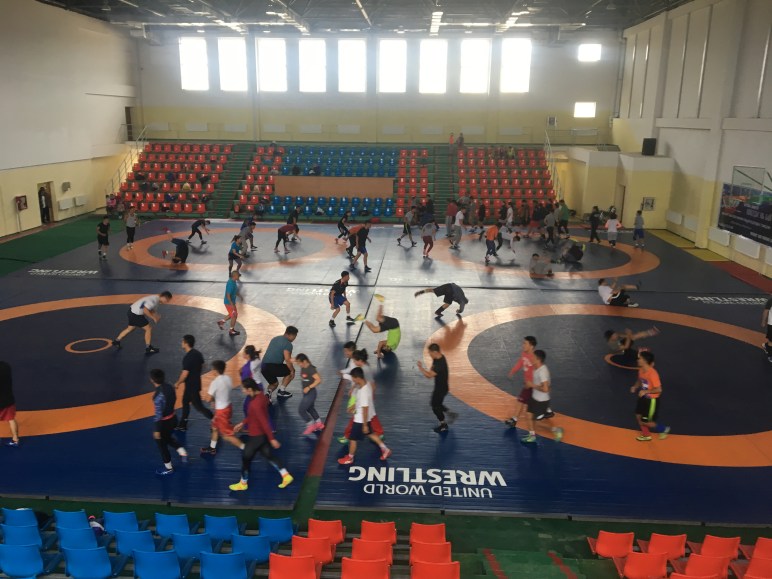
What’s the difference between Japan and USAs female wrestling programs?

  • Japan has won 16 of 24 Olympic Gold Medals (China 2, Canada 2, USA 2, Germany 1, Ukraine 1)

  • Japan has won 24 of 31 World Championship Team titles (China 2, Russia 2, USA 1, Norway 1, Azerbaijan 1)

  • Japan has won 11 of 18 World Cups (China 6, USA 1)

  • Japan has won 91 individual gold medals at the World Championships (China 26, France 22, USA 20)

After attending Japan wrestling training camps in 2007, 2008, 2009, & 2012, the author suggests…  

Historically, the answer to the question above is medals won at the Olympic Games & World Championships.  But that is only a short, results driven answer.  This paper attempts to unravel some other differences that provide reasons for the results.

The author believes there are several differences (and one main difference) that determine the results of either program.  One difference is the superstar status successful female wrestlers are given in Japan.  Another difference is the lack of stigma attached to female wrestling in Japan.  The final difference, and the main difference, is folkstyle versus freestyle when most females start wrestling & competing here in the US as compared to Japan.

Folkstyle versus freestyle
In The Great Debate for Female High School Wrestlers: Freestyle or Folkstyle, several US female collegiate wrestling head coaches and exceptional women wrestlers stated that the reason Japan has better results in freestyle wrestling — is because Japan’s females start wrestling and mastering freestyle from Day 1.  The author believes this too and also offers this trickle down theory (or trickle up theory).

Because beginner Japanese female wrestlers start mastering freestyle from Day 1, this must mean they are being taught freestyle wrestling by their coaches.  On the surface, that statement seems obvious.  But take a deeper look at the next couple of sentences…

This also means that most or all the coaches in Japan are teaching only 1 style of wrestling to beginners.  This also means there is no transition from folkstyle to freestyle for beginners or elite level wrestlers.  This also means that those Japanese coaches (without trying to) are working together for a common cause — “Help our female wrestlers master freestyle wrestling for Japan.”

Juxtaposition
If the last paragraph’s statements are facts, does this mean the opposite is true in the US?  In the States, all high schools that sanction high school wrestling state championships for boys or girls sanction folkstyle wrestling.  Many high school females start wrestling in high school and may or may not ever learn freestyle during the off-season (many female wrestlers enter college with little to no freestyle training).  Also, many male high school coaches may not teach freestyle (or have ever wrestled freestyle) in the off-season.  

In the US, many male high school coaches that participated in athletics in college, participated in folkstyle sanctioned wrestling for either of these collegiate athletics governing bodies: NCAA, NAIA, or NJCAA.  If many US male high school wrestling coaches have never wrestled freestyle nor do not teach freestyle wrestling to females — those coaches may be at a disadvantage to prepare female freestyle wrestlers if compared to their Japanese wrestling coaching counterparts (or most women’s wrestling college coaches).

Superstar or Stigma
In many countries around this planet, professional champions of basketball, soccer, football, baseball, & ice hockey are regarded and treated as superstars.  A similar feeling of gratitude is given to Olympic athletes around the globe in many Olympic sports that appear on television.  In Japan, women wrestlers who have won Olympic & World medals are treated like superstars similar to the preceding sentences.  

This is mentioned because a main reason many young females join sports and aspire to be champions — is because of their sport role models and there is no related stigma attached to that sport.  In fact, it’s the complete opposite of a stigma i.e. many, many people approve & encourage females to join that sport.

In Japan, females are encouraged to join freestyle wrestling (at all levels) and to emulate their respective superstar role models!

At this writing, 34 States have sanctioned & approved a high school girls wrestling state championship tournament in folkstyle wrestling.  This is progress!  The author also submits that when all high schools that have a boys high school wrestling team approve (promote, recruit, & encourage) a girls wrestling team at their school, the female wrestling stigma will begin to lessen and female wrestling opportunities will become more limitless…

Imagine this:

  • All coaches that promote, recruit, & encourage boys to wrestle also promote, recruit, & encourage girls to wrestle

  • The successful boys wrestling teams in your State also have successful girls wrestling teams in your State
     
  • Girls high school wrestling uses modified folkstyle rules that are very similar to freestyle rules

Imagine wrestling participation in US high schools doubling!!

Imagine that!!!!

Conclusion
Three solutions to closing the gap with Japan’s women’s wrestling program are highlighted in the last paragraphs.  Those 3 ideas will help US female wrestlers with the transition to freestyle wrestling and lead to lessening the stigma for female wrestling in the US.  The domino effect (US female wrestling participation growth) will also happen with those 3 solutions…

For more than 3 solutions to close the gap with Japan, check out this page and at the bottom of the article How to Become a Woman College Wrestler.

Copyright © by Coach Shannyn,  All rights reserved

Blog 35: Appropriate relationships in sport

Appropriate relationships in sport
by Shannyn Gillespie
IG: @coachshannyntalks
FB: @coachshannyn.com

Sport is a microcosm of society… What does that really mean?  The author believes it to mean “whatever happens in society (good or bad) — will happen in sport”.

Recently, the media has been reporting inappropriate relationships that have sometimes been related to the “Me Too” movement.  Also recently, many sport groups i.e. club, high school, college & internationally have dealt with inappropriate relationships between athletes & coaches (read student & teacher).  This paper’s thesis is to point out overlooked situations by students & athletes as it relates to inappropriate relationships.

Teacher & student

In most of the circumstances below, try to think of a very effective & productive teacher & student relationship as it relates to education in all US school systems from Kindergarten to college & university.  In all of these situations, the goal of the teacher is to impart knowledge of a specific academic discipline so that the student learns & masters the subject being taught.  The teacher, also being a mentor, reports any abuse reported by the student to safeguard the student’s welfare and enhance that student’s learning environment.  The next several paragraphs focus on ideas about inappropriate relationships amongst athletes & coaches.

Coaches dating athletes

This area seems to be straight forward — in no circumstances — should athletes date coaches.  Here are 2 reasons why athletes should not date coaches:

  1. It’s illegal with minor athletes
  2. It’s a conflict of interest

Let’s say the athlete is an adult…  Per rule #2 above, it is still a conflict of interest because the coach’s role is to teach the athlete how to improve in sport & life — while the athletes role is to learn the skills, drills, technique, strategy, etc. to improve and execute what was learned during the training sessions.

Also, when a person is in an authoritative or leadership position, it is a conflict of interest to date anyone whom they hold authority over.  

What is a conflict of interest?

To be clear, here’s what a Google search defines “conflict of interest” as: a situation in which a person is in a position to derive personal benefit from actions or decisions made in their official capacity.

Coaches Education

Coaches Education (usually a certification) is required by most States & high schools prior to coaching while other types of testing may be required by National Governing Bodies or colleges prior to coaching.  This is also straight forward.  However, there appears to be something missing…

Another approach may be warranted due to the many occurrences of inappropriate relationships in sport between athletes & coaches.

Another approach

Below are some other approaches that may help educate athletes & coaches (parents too) about inappropriate relationships in sport between athletes & coaches:

  1. Administrator workshops to coaching staff & parents 
  2. Head coach’s talks to assistant coaches
  3. All school student lectures about relationships in sport
  4. Coaches talks with team about relationships in sport
  5. Reporting crimes, inappropriate relationships by all the above

In the event the coach is not at a high school or college coach (they coach at a sport club or own an athletic club), this type of coach could be required to attend National Governing Body seminars or lectures by the National Administrators via in person or the many internet based media platforms that allow face-to-face discussions.

This list is not exhaustive and may add some clarity to athletes & coaches on how to prevent or report abusive relationships in sport.  Many coaches & athletes may actually view the (current) required testing or certification platforms only once and these ideas offer 2-3 times of listening or viewing this important topic.

Age appropriate

The title of this paragraph is misleading…  This author believes there is no appropriate age for an athlete to date a coach due to the second bullet above in this article i.e. it’s a conflict of interest.

It does not matter if the coach is 19 years old and the athlete is 17 years old — this is still an inappropriate relationship.  It may be hard for a young coach to understand this and this is why it is being written in black & white.  In this case, it’s also illegal because the 17 year old is also a minor.

What about college age athletes?

Bullet number 2 above really addresses this topic completely — it’s a conflict of interest.  The coach’s job is to teach sport.  The athletes job is to learn & execute what the coach has taught.  Inappropriate relationships are not a part of that teaching & learning scope.

Cover-ups

Reporting inappropriate relationships between an athlete & coach is the opposite of cover-ups.  This means when a person in a position (athlete, parent, athlete, administrator, organization), who is aware of a crime or inappropriate relationship, reports said crime — it is not a cover-up.  Conversely, when parties are aware of a crime, and do not report crimes or inappropriate relationships, this can be considered a cover-up or covering up the crime.

It is incumbent on witnesses that see or are aware of — crimes in sport — to report them.  However, as seen in the “Me too” movement, many are afraid to report crimes or inappropriate relationships for many reasons (fear, shame, losing job; position; or rank, feelings of guilt, etc.).  

This has been an issue for all parties…

It’s safe to say, now, that people are listening.  Please report crimes in sport (and outside of sport too).  

We care.

We are listening.

Appropriate relationships

For a long time, the author fought this idea that a coach is really in a position to develop a parental relationship with athletes.  But really, a coach is a mentor, teacher, coach, & parental guide — while the parents are away or not present.  In many cases, parents rely on coaches to teach “right & wrong” through the rules of sport with the notion that there will be some carry-over-value or transfer of ideas imparted to the athlete.  In other cases, parents rely on coaches to reinforce what is being taught in their very own homes like: doing things the right way, working smart & hard, and following societal rules.

Growing the sport

It is important that as we teach & coach, we also pay attention to current events.  It is our job to make the oldest sport in the world — the greatest sport in the world.  Let’s all recognize what is going on, make a positive difference, & continue to improve/grow — in all aspects of sport.

Blog 34: A controversial article

A controversial article
by Shannyn Gillespie
IG: @coachshannyntalks
FB: @coachshannyn.com

Why do athletic/sport leagues around the globe separate the genders in competition? 

That question is the theme of this article and the short answer appears to be a competitive advantage.  Below, will discuss several issues that wrestling enthusiasts are also faced with when males compete with females after puberty…

Injuries

Wrestling, like many sports, does have injuries and this fact is exasperated when females compete with males.  In other words, males get injured when wrestling males frequently and seemingly at every tournament.  

The nature of sports & athletics predisposes many to injuries which are not limited to these factors: strength, overuse, fatigue, incorrect technique, & nutrition.  This info is not new and again is intensified when males wrestle females largely due to the first point or the strength factor.

Weight classes

The main reason for weight classes in weight class sports is to create competitive balance.  Written another way, bigger stronger athletes have a strength advantage over smaller less strong athletes in the same sport.  

Those words are not meant to be disparaging and are in fact — facts.  If this were not the case, weight class sports would not have weight classes and competitive balance would not be an argument.  This paragraph ties into the last paragraph regarding strength & injuries.

Opportunity

For almost a century (wrestling started in US colleges in 1903) females were not allowed to compete in collegiate wrestling nor scholastic (high school) wrestling.  In fact, the first women’s varsity program was sponsored at the University Minnesota-Morris in 1993.  The first state to sponsor or sanction high school girls wrestling was Hawaii in 1998.  Now, there are 80+ collegiate women’s wrestling sponsored programs and 30+ states that sanction high school girls wrestling.

Does the last paragraph imply that females did not want to wrestle?

Or…

Does that paragraph imply that females were not allowed to wrestle?

The author believes it is a combination of the above factors/questions based on the below rationale.

Many females were not allowed or encouraged to participate in sponsored nor sanctioned athletics really until the passing of Title IX in the US.  So, many females did not believe it was their place to participate in athletics nor sports like wrestling.  

Because female wrestling is one of the fastest growing sports in US colleges & high schools, it stands to reason that many college athletics conferences and high school athletics organizations provide opportunities for female wrestling.

The challenge with the last sentence could be the word “reason”.  

Other sports

Most college & high school athletics are separated by gender due to the injury, strength, & competitive balance factors.  In some cases where a female athletic team is not sponsored at a US college or high school, a female may join a male team.  As suggested, this provides opportunity and also gives males a competitive advantage while increasing the injury risk for females – in all sports/athletics including wrestling.

Seems obvious

The reality of males competing against females in wrestling is seen frequently in US high school athletics (and below high school levels).  The other truth is that most sports in the US provide an opportunity for females to have a female only version of the sport.  The question to ask to the powers that be in scholastic wrestling is this:

Why is it okay for females to compete against males in wrestling, but not in the majority of athletics like basketball, baseball, track & field?

It is rare for females to compete against males at the college level in wrestling but many large NCAA DI college conferences like the Pac 12, Big 10, Big 12, ACC, & Ivy League do not sponsor female wrestling.  So, if females want to compete in wrestling in those very well known college conferences, they must form a wrestling club largely on their own…

This does not seem fair.

Closing thoughts

Female wrestling in the US has made great strides since 1993 & 1998.  Female wrestling has the opportunity to create even more competitive balance plus participation growth (and reduce female wrestling injuries) by sponsoring & sanctioning female only wrestling in all colleges & high schools that sponsor & sanction athletics.  This will have a trickle down effect too and impact female wrestling students below high school levels that, in many cases, idolize & emulate their heroes.

BLOG 33: The Mongolian Experience Recap

The Mongolian Experience Recap
by Shannyn Gillespie
IG: @coachshannyntalks
FB: @coachshannyn.com

From June 16 – August 12, 2017, Coach Shannyn toured Mongolia as a strength & conditioning coach for both the men’s & women’s Mongolian National Freestyle Wrestling Teams.

The author has been offered to write a story about these experiences by Amateur Wrestling News to be published in their print & online subscription service in the October edition – so, this blog will serve as a promotion for that article, a video recap of sorts, & a discussion on the importance of interval training for wrestling:

Please view our YouTube page & below for the entire catalogue, synopsis of The Mongolian Experience via a video recap:

  1. Mongolian Wrestling 2017 (14 videos)
  2. Mongolian Training 2017 (18 videos)
  3. Mongolian Landscape 2017 (20 videos)
  4. Mongolian Random 2017 (9 videos)

In addition to above, #coachshannynmongolia can be used at below social media for more video recaps:


You can also learn more about High Performance Training right now at the below links:

Copyright © by Coach Shannyn,  All rights reserved

Blog 32: The U23 World Champ. Blog

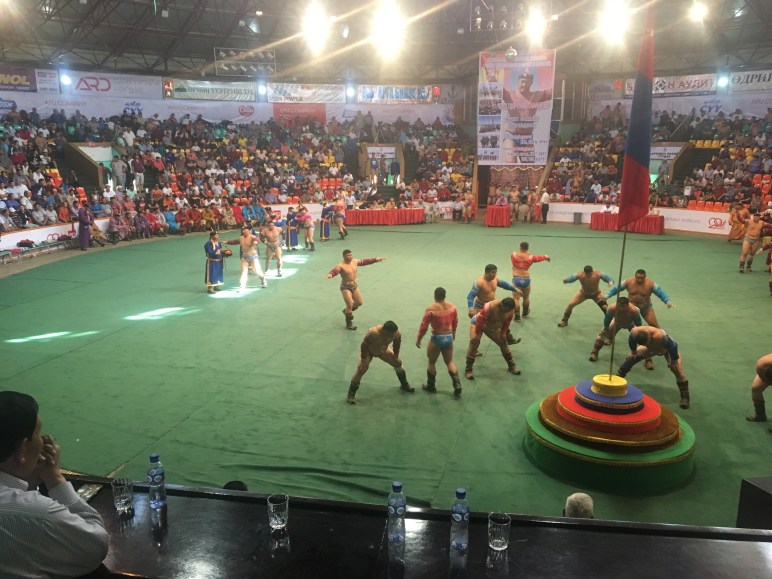
Mongolian “National Wrestling” displayed in above image during Coach Shannyn’s tour of Mongolia.  (This blog was written in Mongolia.)

The U23 World Champ. Blog
by Shannyn Gillespie
IG: @coachshannyntalks
FB: @coachshannyn.com

In the below video, a discussion is lead regarding the U23 World Championships scheduled to take place November 21-26 in Bydgoszcz, Poland:

Currently, these wrestling world championships exist:

  • Olympic Games
  • Sr. Worlds
  • World University
  • U23 Worlds
  • U20 | Jr. Worlds
  • U17 | Cadet Worlds

Prior to making a national team that competes in one of the above world championships, athletes must compete in a national tournament or some type of world team trials to represent their country on the world stage and these tournaments are generally held in the spring or summer.

All of the world championships are typically held from July-November or during the summer and now fall months.  These world championships, now more than ever, have a more direct negative impact on long term athlete development for many high school and collegiate wrestlers in the USA.  This is stated because most USA high school & collegiate wrestlers’ season is from November – February or March, and, if these athletes’ competed in these summer or fall world championships, they might be competing year round.

Year round training & competing does not allow the body to adequately recover, adapt, adjust, nor supercompensate.  When the body (muscles & mind) properly recover after training bouts & competitions, there is a period of time that the body relaxes and is ready to begin training or competing again.  Many sports scientists call this part of the season the transition period while many coaches simply call it the off-season.

Because of the amount of competitions and tournaments that are available now year round, high performance training (a systematic approach to training & competing) is becoming more important.  HPT takes into consideration the entire calendar year as it relates to the athletes’ long term growth, development, & overall welfare.

The author suggests that too many competitions annually will ultimately contribute to burnout, overtraining, & a lack of motivation for training or competitions.  Too many competitions (i.e. competing year round) without a break – is not recommended by many sports scientists nor coaches for optimal training/preparation in a long term athlete development plan.

To prevent overtraining or under-recovery in today’s world of year round competitions AND to promote peak performances in major competitions, it is suggested to carefully plan, plus, have a definite understanding and application of these training principles: periodization, recovery, peaking & tapering, & high performance training.

Coaches, parents, & administrators have to keep the student athletes’ total health in mind – if they plan to prepare these students for year round competitions – due to the significant higher risk of burnout, overtraining, & injuries induced by 12-month long training & competing.  These 3 factors or characteristics are more likely to exist when athletes are competing year round and may actually reduce the total amount of athletes in our wonderful sport over the long term.


Related articleCoach Shannyn | Back to High School | Off to Mongolia

Social media: use #coachshannynmongolia for Mongolia tour video recaps:


You can also learn more about High Performance Training right now at the below links:

Copyright © by Coach Shannyn,  All rights reserved

Blog 31: Coach Shannyn | Back to High School | Off to Mongolia

Shannyn Gillespie (1)

Update: for #coachshannynmongolia video review:


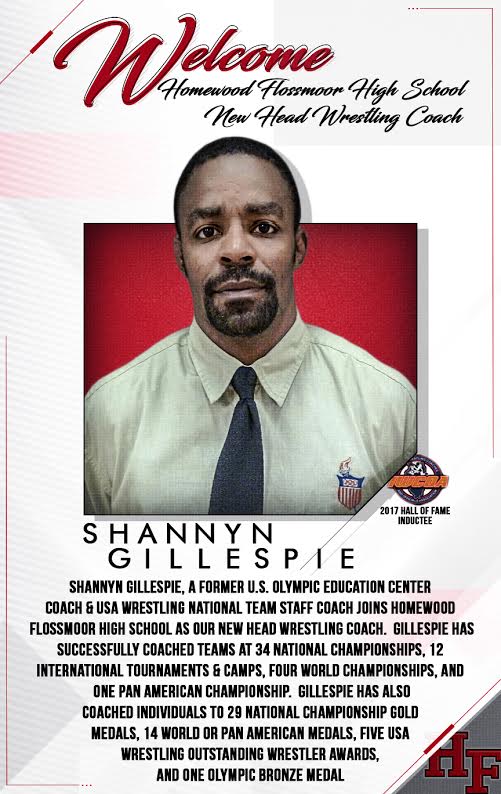
After a very successful season with the Lincoln College (LC) wrestling program, where he and head coach Daryl Thomas guided the Lynx wrestlers to academic & athletic success, Coach Shannyn is embracing new opportunities as head wrestling coach at Homewood-Floosmoor (IL) high school next fall and also strength & conditioning coach for the Mongolian Wrestling Federation this summer.

The LC wrestling program amassed a team cumulative grade point average of 3.02 during the first semester and also went from 29th to 4th at the NJCAA National Championships during Coach Shannyn & Coach Thomas’ tenure.

Coach Shannyn stated “I will bring the same level of expectation and excellence to HF”.

Gillespie, who prefers to be called Coach Shannyn, also has experience as a strength & conditioning coach and suggests this was part of the reason the Lynx wrestling program achieved more success than the previous year – prior to he and Coach Thomas arriving:

“In weigh-in sports like wrestling, judo, MMA, or even Olympic weight lifting, close to maximum strength for the entirety of the season is important.”

He went on say “My experience as strength & conditioning coach at the U.S. Olympic Education Center Female Freestyle program was a large part of the reason the ladies were able to maintain their strength at the World Team Trials, Jr. Worlds, University Worlds, & Sr. Worlds.”

From 2004-2012, Coach Shannyn was the women’s program coordinator for the U.S. Olympic Education Center wrestling team.  During his stint at the USOEC, he coached at 34 National Championships, 12 international tournaments & camps, 4 World Championships, & 1 Pan American Championship.

At the USOEC, Coach Shannyn also coached individuals to: 29 National Championship Gold medals, 14 World or Pan American medals, 5 USA Wrestling Outstanding Wrestler Awards, & 1 Olympic Bronze medal.

When asked how we will transition what he has learned to Homewood-Flossmoor & Mongolia, he replied “The invaluable knowledge that I’ve learned at my most recent jobs with the U.S. Olympic Training Centers, USA National Teams, Overtime School of Wrestling, & now Lincoln College will be a huge part of the success of the High Performance Training systems employed at HF & Mongolia“.


You can also learn more about High Performance Training right now at the below links:

Copyright © by Coach Shannyn,  All rights reserved

Blog 30: HPT-PST Day 7: Performance Planning

Using all of the HPT – Psychological Skills Training consistently to perform is called Performance Planning.  In this version of Performance Planning, learn how to use the very important skill of a recovery routine to recover from adversity.


In a nutshell, a recovery routine or a recovery plan is a well thought out strategy to help you deal with unplanned events.

What unplanned events can happen at a competition?

Here is a list of some of the unplanned events that have happened to me or athletes I have coached:

  • Re-paired bracket
  • Competition bus leaves you
  • Lights go out
  • Electricity goes out & stops your match
  • Tournament is delayed
  • Bad call by referee
  • Lost match
  • Losing streak
  • Feeling pressure to win
  • Competition venue too cold
  • Competition venue too hot

How do you deal with these unplanned events and still compete at a high level?

The main point for a recovery plan/routine is to apply a systematic strategy to deal with unplanned stress (adversity) that disrupts productive performance(s).

To learn more about recommended recovery plan strategies, please view the above video.


You can also learn more about High Performance Training right now at the below links:

Copyright © by Coach Shannyn,  All rights reserved

Blog 29: PST • Performance Planning

Performance Planning is the culmination of  Psychological Skills Training to be applied everyday in practice and at all competitions.  This plan will assist your long term athlete development for your career.

Many athletes & coaches focus their collective strategy for success in competitions on mastering physical skills that deal with: technique, tactics, and strength & conditioning.  This is very common as it should be, right?

What about the psychological side or mental training that must also be honed daily?

Let’s look at it another way…

What happens when athletes get overly anxious or tense or nervous?  Do they perform optimally or at their very best?

Or, do they freeze up and perform much less then optimal or much less than their best?

In my experience, the latter is more probable and this is the reason why performance planning encompasses Goals, Focus, Self-Talk, Imagery, & Energy Management.  These mental skills or psychological skills can be trained, combined, & executed to assist all wrestlers in meeting the results they want to achieve – if trained in an everyday fashion – just like practice.

What’s the secret to success?

Are you ready for the answer?

The secret to success is a very effective written plan that is executed and is continuously revised for improvement.  Some say, this is the essence of learning and then applying what has been learned.

Rest assured, competition breeds competition.  In other words, at most points in everyone’s life, they will be competing against others who also use effective plans or what I like to call High Performance Training plans.

Because of the last paragraph, it may make sense to start using an effective plan for success today (then execute & revise the plan) – and now you have the tools to do so!


You can also learn more about High Performance Training right now at the below links:

Copyright © by Coach Shannyn,  All rights reserved